You clear the calendar. The discovery sprint gets your full attention. The engagement brief gets read closely, discussed, and signed. For a few weeks, strategy is the most important thing in the building.
Then the calendar refills. A hiring push, a board deck, a customer escalation, a fundraise that suddenly needs a data room. None of it is wrong, and none of it is a decision to stop doing strategy. Nobody decides that. Strategy just stops getting the hours, and the roadmap everyone agreed to in week two quietly becomes a record of what the company had intended to do.
We've watched it happen enough times to stop treating it as a client problem. It's a design problem — and I'd argue it's ours to solve, not yours. A roadmap tells you where you're going. It says nothing about what happens on a Tuesday when nobody has time.
So the first thing we install, in the first week of every engagement, isn't a roadmap. It's a rhythm.
Rhythm vs. Roadmap
A roadmap is a promise about the future. A rhythm is a promise about next Tuesday. Only one of them survives a full calendar.
A roadmap is a plan, and plans fail in a predictable way: they depend on somebody having time. Ambition is front-loaded, effort is back-loaded, and the moment the calendar tightens, the plan waits. It waits politely, for weeks, and then it's stale.
A rhythm is a set of appointments. It doesn't depend on anyone finding time, because the time is already found. The working session is on the calendar. The draft is due. The review is on Thursday. Every ritual has a room, an artifact it produces, and a failure it exists to prevent. When your month goes sideways, the roadmap slides. The rhythm holds, and the work moves anyway, because the next decision is never more than a few days away.
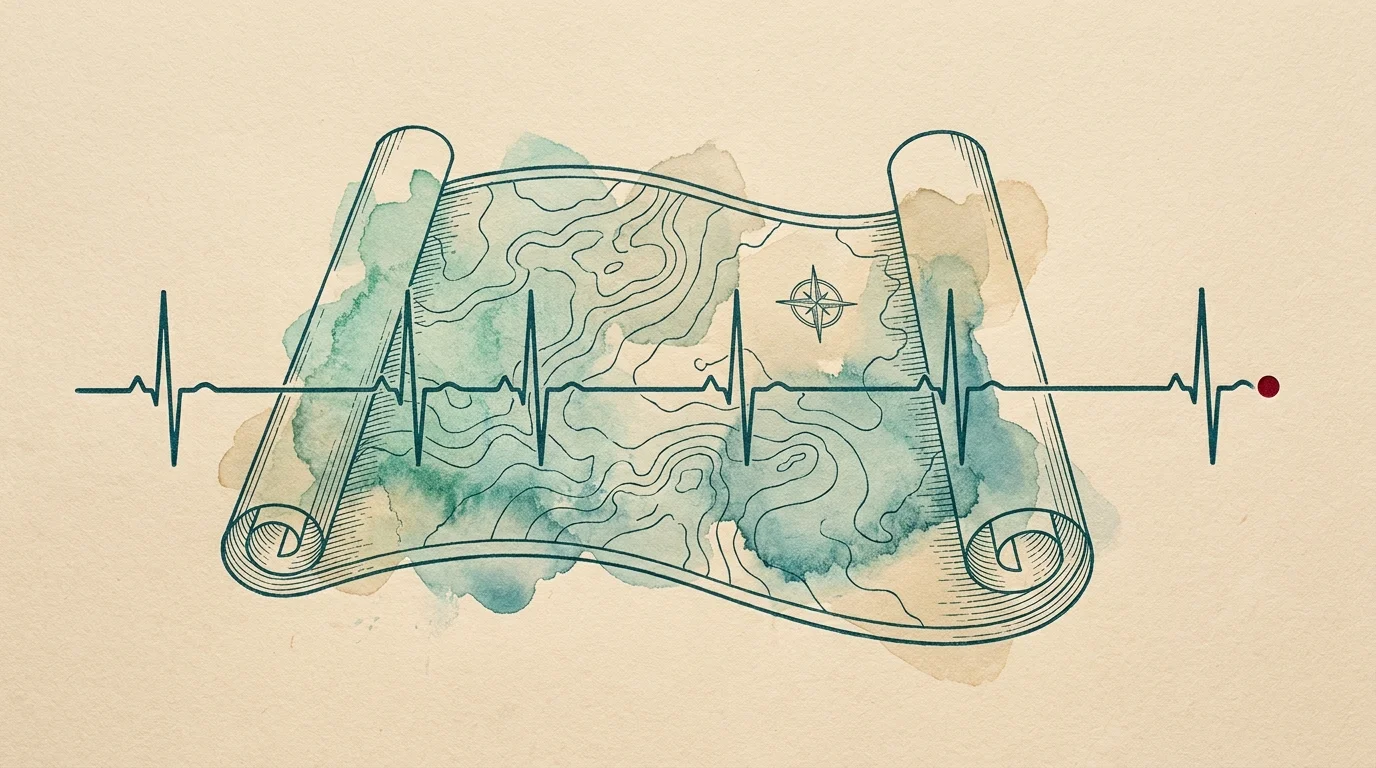
That's the whole bet. We're not claiming we plan better than anyone else. We're claiming strategy needs a heartbeat more than it needs a map.
The Cadence
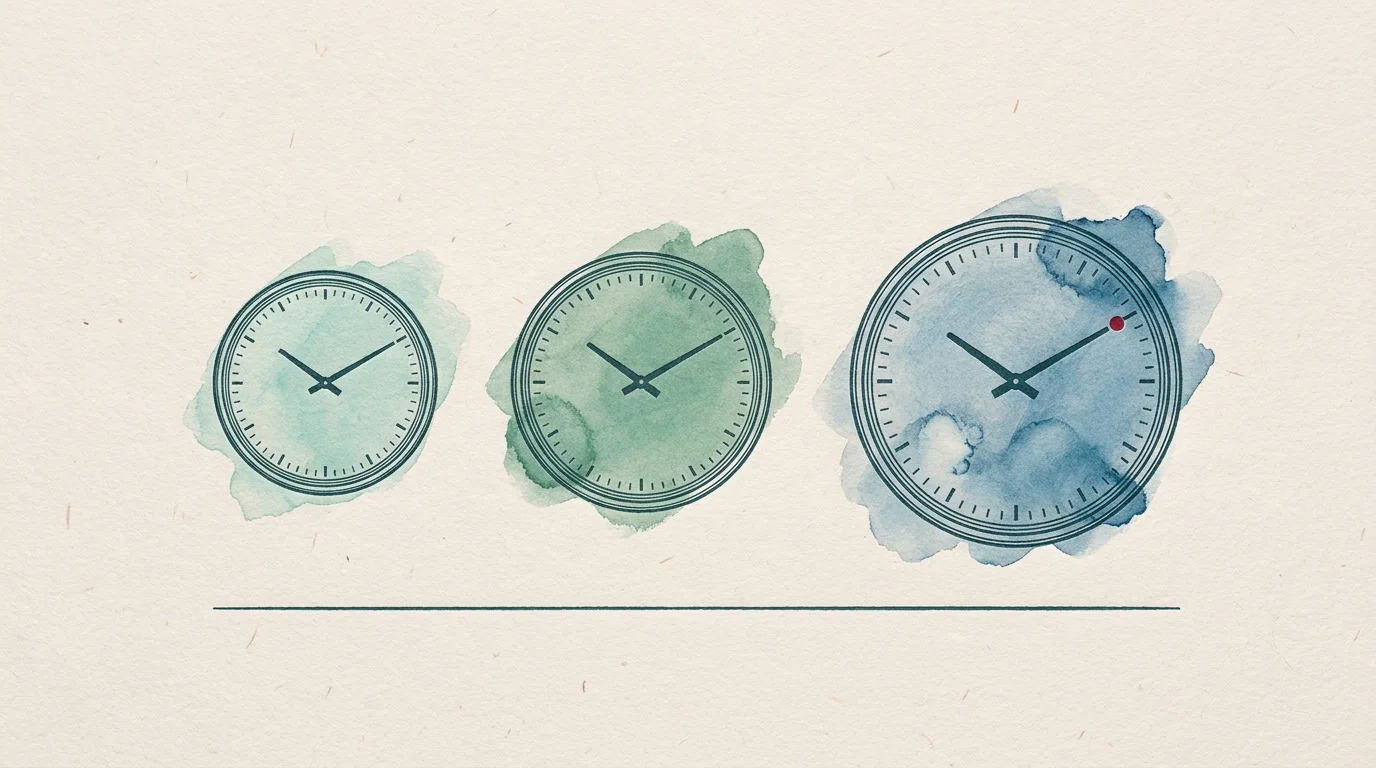
Three rituals, on three clocks. We put them on the calendar before the first draft exists, and we keep them there for the first ninety days — long enough for the rhythm to become how your team works, rather than something the studio brought in.
Copy It Into Your Calendar
The 90-Day Operating Cadence
Three rituals on three clocks. Each has a room, an artifact, and a failure it prevents. Install all three in week one and keep them for a quarter.
Every week: the working session.
A standing session where the work is done in the room, not reported on. In the room: the people who own the work. Artifact: a decision log — a running doc in whatever your team already lives in, Notion, Asana, a shared Google Doc — covering what moved, what's open, who has it. Prevents: silent drift, the week where nothing happened and nobody noticed.
Every two weeks: the draft.
Something real ships — an outline, a rough cut, a half-built strategy — clearly marked as a draft, with a named ask. In the room: the founder and whoever has to live with the answer. Artifact: the draft, and the reactions to it. Prevents: the big reveal, and the polished-and-wrong work that hides behind it.
Every month: the decision review.
One session where the open decisions get closed. In the room: the founder, the studio lead, and anyone who holds a veto. Artifact: a short list of decisions made and a shorter list deferred, each with a date. Prevents: the stack of small, unmade decisions that quietly stalls everything downstream.
The short version: weekly, the work moves. Twice a month, the work becomes visible. Monthly, the work becomes decided. Miss one clock and the other two start to slip.
The Weekly Working Session
This is the one people mistake for a status meeting, so we're strict about it. Nobody reports progress. We open the document, the deck, the brief — whatever the live piece of work is — and we work on it together, in your tools, with the people who own it. If the positioning statement is wrong, we rewrite it in the session. If the launch plan has a gap, we fill it before we leave.
The artifact is a decision log, and it's deliberately dull: what moved this week, what's still open, who has it. Its job isn't to impress anyone. Its job is to make drift visible. Drift is silent by nature; a week with no entries is a week that announces itself. That's the failure this ritual prevents: not a bad decision, but the slow absence of any decision at all.
The Twice-Monthly Draft
Every two weeks, something real ships to you. Rough versions start in week two, on purpose, and they keep coming: an outline, a rough cut, a strategy with visible gaps. Each one is clearly marked as a draft and arrives with a named ask — react to the structure, ignore the wording — so nobody spends their energy proofreading a sketch.
The room is smaller here. The founder, and whoever has to live with the answer once it's made. The artifact is the draft itself, plus what the room said about it, which is usually more valuable than the draft. And the failure it prevents is the big reveal. Polish hides disagreement until it's expensive. A draft every two weeks means disagreement never gets more than two weeks old.
The Monthly Decision Review
Weekly sessions move the work and twice-monthly drafts make it visible, but neither one is built to close things. Decisions accumulate. Small ones, mostly — which name, which audience first, whether the pricing page ships before or after the launch — and each one, unmade, holds up something downstream. By the end of a month there's a stack, and the stack is what actually stalls a strategy.
So once a month, one session, with the founder, the studio lead, and anyone who holds a veto. We walk the open decisions and close them. The artifact is two lists: decisions made, and decisions deliberately deferred, each with a date it comes back. Deferring a decision is fine. Deferring it without a date is how a strategy stalls without anyone ever deciding to stop. That's the failure this ritual prevents: the quiet backlog of things nobody said no to and nobody said yes to either.
Why Ninety Days
A quarter is the shortest span in which a rhythm can prove itself. It's long enough to have survived at least one bad month, and short enough that nobody agreed to it forever. By day ninety the working session has happened roughly a dozen times, the draft six, the decision review three. That's enough repetitions for the team to stop experiencing the cadence as something the studio runs and start experiencing it as how the company works.
It also maps to the enemy. Your calendar doesn't refill in a week. It refills over a quarter, gradually, one reasonable commitment at a time, until strategy is the thing that gets bumped. The cadence is sized to outlast that. By the time the calendar is full again, the rituals are already load-bearing, and bumping one of them costs something visible.
What Month Three Looks Like
If the rhythm holds, month three is unremarkable, which is the point. Your calendar is full again, and it doesn't matter, because the strategy stopped depending on your free time somewhere in month one. The working session runs whether or not the studio prompts it. The draft is expected, and the room knows how to react to one. The decision review has closed more decisions in a quarter than the previous year's roadmap ever did, and the deferred list is short, dated, and honest.
Most importantly, the team owns the clocks. That's the handoff we're working toward from week one: not a document, but a rhythm your team can run without us. The decision log is theirs. The draft habit is theirs. The monthly review is on their calendar, not ours. The roadmap will need rewriting by then, because roadmaps always do. The rhythm won't.
This probably sounds like a lot of scaffolding for three recurring calendar invites. It is. That's the point — the scaffolding is doing the work your free time used to do.
Install the rhythm before you need it. By the time the calendar fills back up, it's too late to build the thing that protects the work from a full calendar.